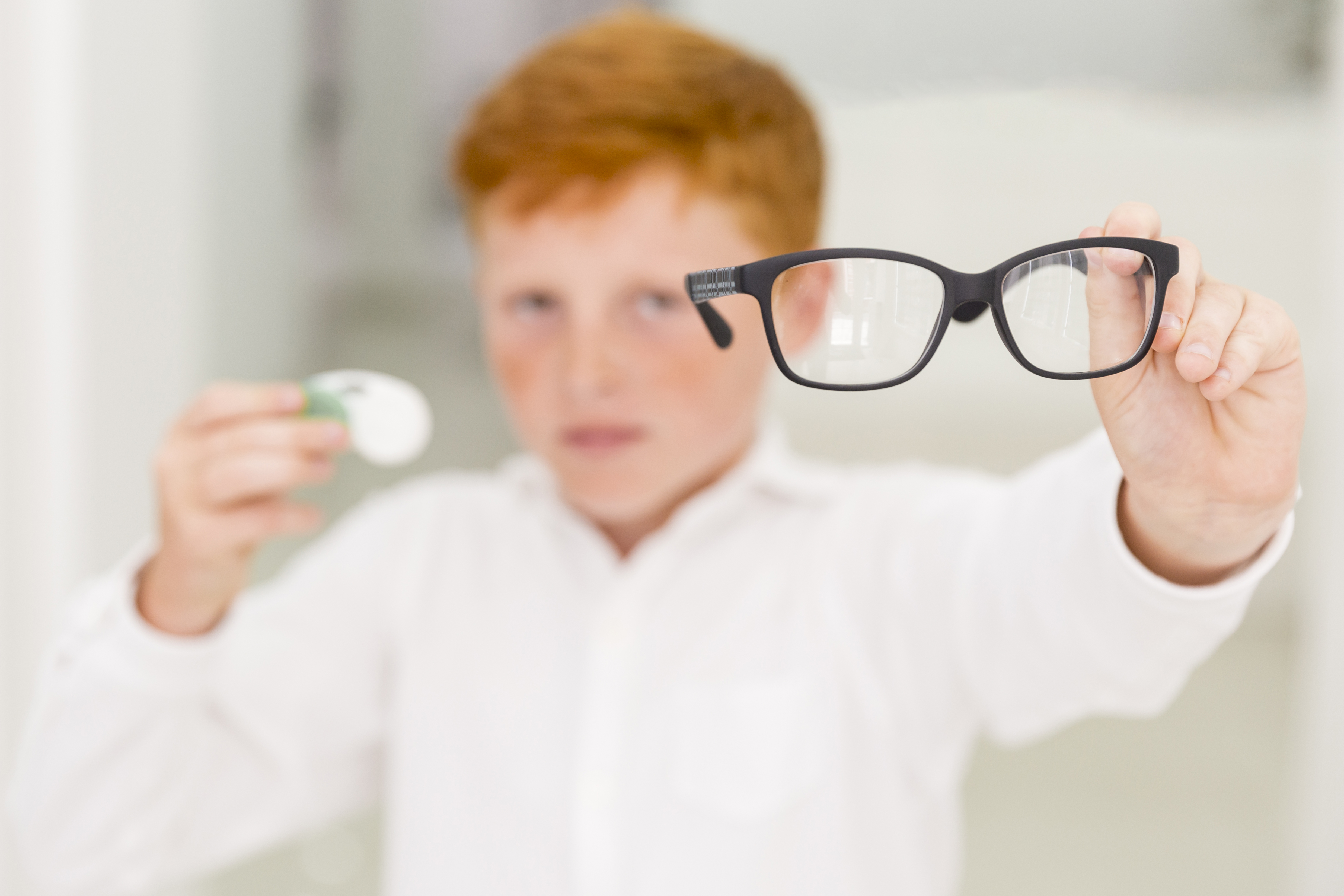
As parents,
we make sure our children get regular check-ups, vaccinations, and dental
visits—but what about their eyes?
Many people
assume that if a child isn’t squinting or complaining, their eyes are fine. But
here’s the truth: vision problems in children often go unnoticed, and
early detection is key to helping them succeed—in school, sports, and life.
As an eye
care professional, I can’t stress this enough: every child should have
regular eye exams, even if they seem to be seeing just fine.
️ Vision Development Starts Early
A child’s
vision develops rapidly during the first few years of life. Any interruption in
this process—whether it’s due to misalignment, poor focus, or an uncorrected
refractive error—can have long-term consequences. The earlier issues are
identified, the better chance we have of correcting them before they interfere
with learning and development.
️ Vision
and Learning Go Hand in Hand
Did you know
that up to 80% of what a child learns in school is visual? From reading
and writing to catching a ball or copying from the board, clear and comfortable
vision is essential.
Uncorrected
vision problems can lead to:
- Difficulty focusing or paying
attention
- Poor reading comprehension
- Headaches or eye strain
- Mislabeling of vision issues as
behavioral or attention disorders
Regular eye
exams can detect problems like nearsightedness, farsightedness, astigmatism,
and binocular vision issues that standard school screenings often miss.
️ Not All Vision Issues Are Obvious
Children
don’t always know they aren’t seeing clearly—they assume what they see is
“normal.” That’s why they rarely complain. Some signs parents can look for
include:
- Frequent eye rubbing or blinking
- Tilting the head or covering one
eye
- Sitting too close to screens or
books
- Avoiding near work or reading
- Unexplained headaches or poor
concentration
But even in
the absence of these signs, an eye exam can reveal hidden issues.
️ When
Should Kids Have Their Eyes Checked?
According to
the American Academy of Ophthalmology and other leading organizations, here’s a
general guideline:
- First eye exam: At 6–12 months of age
- Second exam: At 3–5 years old
- Before starting school, and then every 1–2 years
thereafter (or as recommended)
Children
with a family history of eye problems, developmental delays, or who wear
glasses may need more frequent monitoring.
️Eye Health Is Linked to Brain
Development
Vision isn’t
just about seeing clearly—it’s deeply connected to brain function. Conditions
like amblyopia (lazy eye) or strabismus (crossed eyes) can affect visual
processing if not treated early. But the good news is all these conditions are
often highly treatable in young children, especially when caught early.
⚕️ What Happens During a Pediatric Eye Exam?
A child’s
eye exam is gentle, thorough, and completely kid-friendly. It may include:
- Checking visual acuity (clarity)
- Assessing eye alignment and
movement
- Examining the health of the eye
inside and out
- Testing for color vision and
depth perception
- Checking how well both eyes work
together
No child is
too young for an eye exam—and many vision problems can be corrected or managed
more easily the earlier they're found.
A Clear Future Starts with a Clear View
Regular eye
exams for children aren’t just about getting glasses. They’re about setting
your child up for success—academically, socially, and developmentally.
If your
child hasn’t had a comprehensive eye exam in the last year, now is the perfect
time.
Dr. Rawnok
Jahan Rahman specialize in eye care and make the process fun, comfortable, and
stress-free for kids of all ages.
️
Schedule Your Child’s Eye Exam Today
Healthy eyes
are the gateway to a bright future. Let’s protect your child’s vision—book
their eye exam today and give them the gift of clear, confident sight.
.png)